


Network Design, Wireless and SD-WAN

What We Do

Trybus Solutions designs, builds and supports the network a business runs on: the switching and wireless inside the building, the wide area network between sites, and the route out to the internet.

Most of our work starts for one of a few reasons. A wide area network contract is up for renewal, switching or wireless is coming up on end of support, a building is being fitted out, or a communications project has run into a network that cannot carry voice and video.

Our clients usually have their own IT team. We are there for the parts that need people who have done this before, and for the work that has to happen out of hours. We work nationwide from Chattanooga, Tennessee.

Manager at a desk in an office

Why Clients Bring Us In

What You Get

Scope varies. One wiring closet does not need the documentation twenty sites do. Below is what we produce on a typical mid-size project, and we agree what you need during scoping.

Everything we produce is yours. If you take the design elsewhere to be built, it will be complete enough for somebody else to build it.

Contact center floor with agents at workstations
Colleagues discussing work at a shared table

The Layers We Work In

Six layers. Most projects touch more than one, and the ones underneath decide what is possible above them.

01

The Physical Layer

Copper and fiber, risers and pathways, containment, racks and closets. We survey what is there and specify what the design needs; the cable itself is installed by the cabling partners we bring in. This is where the easy assumptions live: room left in a riser, power and cooling in a closet, and labeling that still makes sense in five years.


02

Campus and Access Layer

Core, distribution and access switching, stacking and redundancy, uplink capacity, and the power budget for everything drawing power over the cable. A refresh here is usually driven by end of support, or by a power budget that ran out when cameras, door controllers and wireless landed on the same switches.

03

Wireless

Predictive design, access point placement, channel and power planning, and a validation survey once the installation is done. Capacity in rooms where everybody arrives at once, roaming that holds a call together across a building, and devices that will never meet current security standards are the harder half.

04

Wide Area Network and Internet Edge

Links between sites, connections out to the internet and to cloud services, path selection and failover, and the traffic policy that decides what gives way when a link fills up. The difficulty is commercial before it is technical: circuit lead times, contract dates, and what can be delivered to an address.

05

Segmentation and Network Security

Separating voice, video, guests, building systems and general data, and controlling what is allowed to reach what. Cameras, sensors and access control share the infrastructure with staff laptops, and most of them cannot defend themselves. We design to the policy that is set, and where none exists that is a conversation with your security people.

06

Monitoring and Visibility

Topology mapping, configuration backup, alerting, and visibility into paths outside your own equipment. Your team should hear about a problem from a dashboard before a user calls, and a bad call should leave evidence instead of an argument. Running the tooling is a separate agreement.

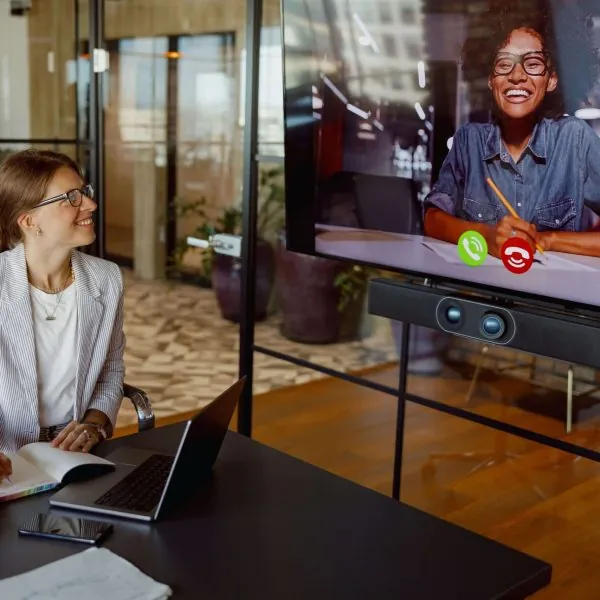
Worker at a desk greeting two colleagues on a desktop video call
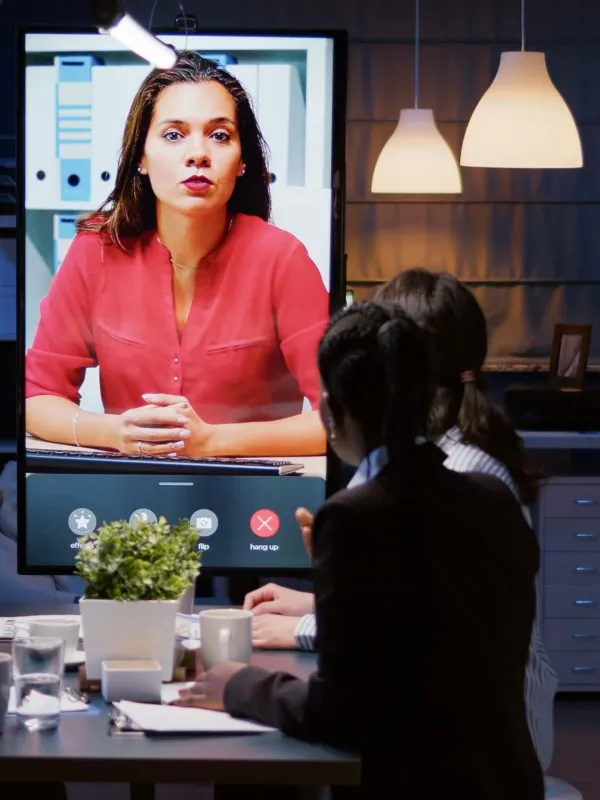
Employee working at a laptop during a video call

How a Project Runs

Broadly the same shape whether it is one closet or forty sites. Timescales depend on circuit lead times, hardware availability, and how much of the work has to happen outside business hours.

What Is Quoted Separately

Most of what is below is work we do. It is not part of a network project by default, because each piece carries its own scope, its own schedule and its own cost. If you want any of it included, say so at scoping and we will quote it in. The last one is different: it is work we do not do at all.

Employee working at a laptop

Industries We Work In

The technology does not change much between sectors. The order of priorities does, and so does what the building will let you do.

Technology We Work With

We hold partner relationships across the networking industry, and our engineers also work in platforms we do not sell. A refresh starts on whatever is in the racks now, whoever supplied it.

We do not publish comparisons between manufacturers. Which platform suits an organization is something an assessment works out, not something a website should decide.

  • Cisco logo — Trybus Solutions technology partner
  • Meraki logo — Trybus Solutions technology partner
  • Juniper logo — Trybus Solutions technology partner
  • Aruba logo — Trybus Solutions technology partner
  • Extreme Networks logo — Trybus Solutions technology partner
  • Silver Peak logo — Trybus Solutions technology partner
  • Auvik logo — Trybus Solutions technology partner
  • Cisco ThousandEyes logo — Trybus Solutions technology partner

See all technology partners →

Talk to Us About a Project

Tell us how many sites are involved, what is driving the date, and whether the buildings are occupied. We will tell you what we think needs doing, and put a scope and a number against it.